Amazon Haul is no longer a small mobile experiment.
By early 2026, Amazon reported that it had expanded the U.S. Haul selection to more than one million items priced under $10, with many below $5. The company also said that Haul and related low-price shopping experiences had expanded to more than 25 countries and regions.
For Amazon sellers, that growth creates a strategic question: should you compete inside Haul, defend your existing Prime business, or wait until the economics and program rules become clearer?
The answer depends less on how cheap your product is and more on four factors: unit economics, product complexity, brand positioning, and whether customers can immediately see why your offer is worth more.
This guide explains how Amazon Haul works in 2026 and provides a practical framework for choosing the right response.
Key Takeaways
- Amazon reported more than one million U.S. Haul items under $10, with many under $5, and expansion to more than 25 countries and regions.
- Haul and the main Amazon marketplace serve different buying situations: Prime emphasizes speed and certainty, while Haul emphasizes price, discovery, and low purchase risk.
- The main strategic risk is price anchoring: inexpensive Haul products can change what customers expect to pay for visually similar items.
- Sellers should not move an unchanged Prime SKU into Haul simply by cutting its price; the offer must be designed around Haul-level economics.
- Compete when a dedicated low-cost offer remains profitable, defend when the premium is visible and meaningful, and wait when eligibility or economics remain uncertain.
What Is Amazon Haul in 2026?
Amazon Haul is a low-price shopping experience within the Amazon ecosystem. It launched in the United States in November 2024 as a mobile-focused destination for ultra-affordable products.
Customers can now access Haul through the Amazon Shopping app and on desktop. Haul has its own browsing experience, but Amazon says the Haul cart can sync with a customer's regular Amazon.com cart.
That integration matters. Haul is not a separate discount website asking shoppers to create a new account or trust an unfamiliar checkout process. It places ultra-low-price products inside an ecosystem where customers already have saved payment details, delivery addresses, order history, and confidence in Amazon's customer-protection systems.
As of August 3, 2026, Amazon's publicly stated U.S. Haul terms include:
- More than one million items priced under $10, with many below $5
- Free delivery on Haul orders of $25 or more
- A $3.99 delivery fee on orders below $25
- Most orders arriving within two weeks or less
- 5% off orders of $50 or more
- 10% off orders of $75 or more
- Free returns within 15 days for eligible Haul purchases over $3
These thresholds encourage shoppers to add several inexpensive items to a single order. A customer who first notices a $5 product may continue browsing until the basket qualifies for free delivery or an order-level discount.
For sellers, the result is a different competitive environment. A product is not competing only against direct substitutes. It is also competing against every other inexpensive item for a place in the shopper's limited basket.
Amazon Haul vs. the Main Amazon Marketplace
Amazon Haul should not be treated as a cheaper version of the main Amazon store. The two environments address different customer needs.
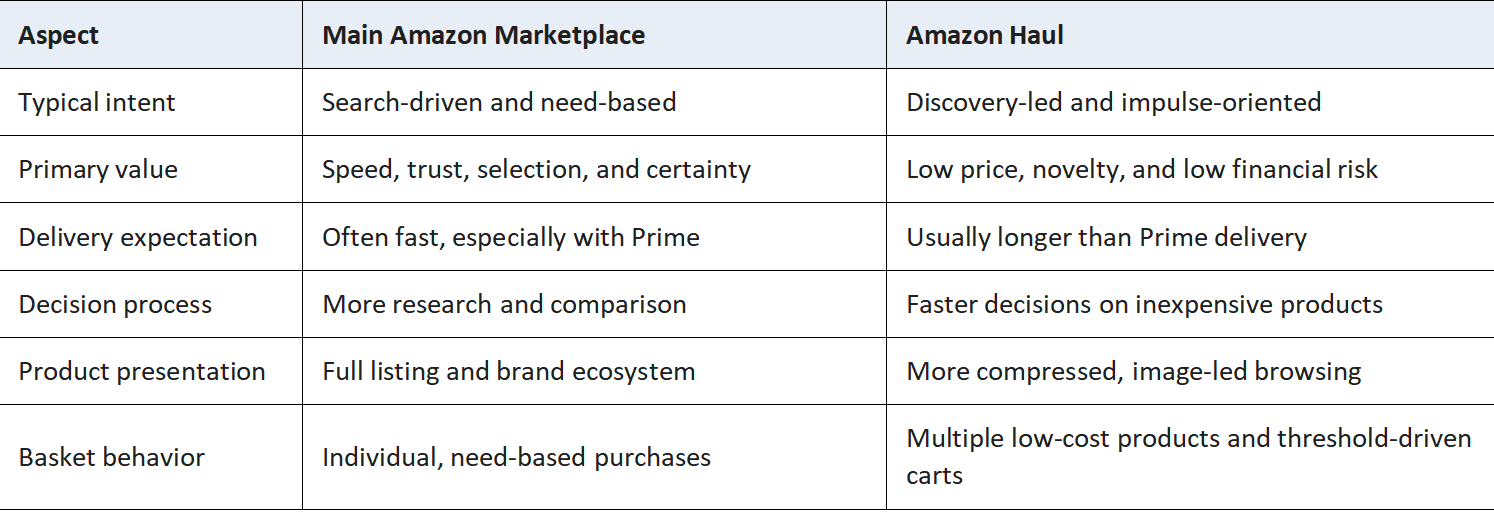
The distinction can be summarized simply:
Prime often sells certainty and speed. Haul sells discovery and low financial risk.
A customer who needs an item tomorrow may still choose a higher-priced Prime listing. A customer browsing without urgency may accept longer delivery, simpler packaging, or a less familiar brand in exchange for a much lower price.
Haul is therefore most likely to pressure products that are inexpensive, visually similar, easy to understand, and difficult to differentiate beyond price.
The Strategic Risk: Haul Changes Reference Prices
The most important effect of Amazon Haul may not be direct sales displacement. It may be price anchoring.
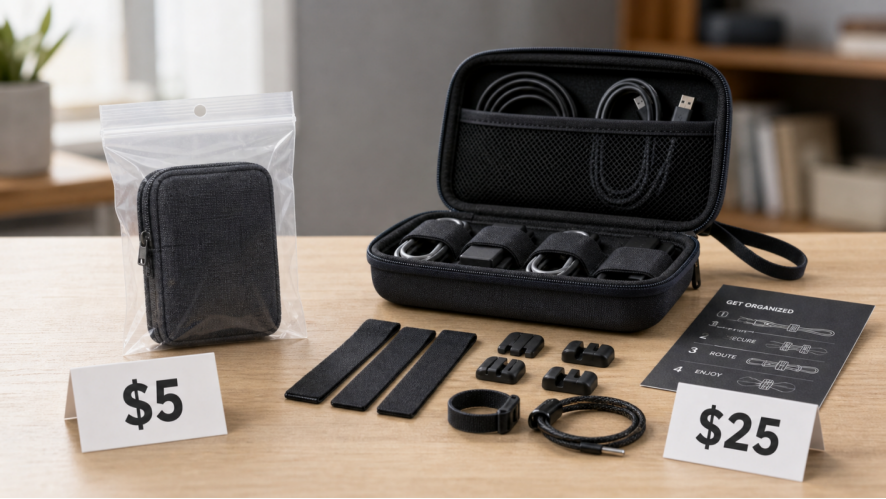
When customers repeatedly see products priced at $3, $5, or $8, those prices become part of their mental reference range. Later, when they encounter a visually similar product for $20 or $30 on the main marketplace, they may ask why it costs so much more.
The customer does not need to buy the Haul item for this effect to occur. Simply seeing a cheaper alternative can change how the higher price is evaluated.
This creates the greatest risk for products that are:
- Highly commoditized
- Visually similar to cheaper alternatives
- Easy to reproduce
- Poorly differentiated
- Dependent on vague claims such as “premium quality”
- Unable to make their additional value immediately visible
The existence of a cheaper Haul option does not mean every seller should lower prices. A higher price can remain defensible when the customer can clearly see what the premium provides, such as:
- Faster delivery
- Better materials or construction
- More consistent quality control
- More complete accessories or packaging
- Clearer instructions
- Better customer support
- Longer warranties
- Stronger safety or compliance evidence
- Larger bundles
- Proven brand reliability
The problem is not a high price by itself. The problem is a high price whose justification is invisible.
The Information-Compression Problem
Customers browsing a low-price, discovery-led channel may make decisions before reading every bullet point or opening every secondary image.
That places more responsibility on the elements visible at the beginning of the shopping journey:
- Product title
- Lead image
- Price
- Quantity
- Size and color
- Included components
- Ratings and reviews
- Delivery estimate
A seller cannot assume that shoppers will study a long description before deciding whether an inexpensive product is worth considering. The offer must be understandable quickly.
What the title should communicate
A Haul-oriented title should prioritize information that helps customers understand exactly what is being sold. Depending on the product, that may include the product type, quantity, material, size, compatibility, and primary differentiator.
This is not an argument for keyword stuffing. It is an argument for clarity.
What the lead image should communicate
The lead image should make the product, quantity, variation, and included components immediately identifiable while following Amazon's current image requirements.
Dimensions, scale references, use cases, comparisons, and in-box explanations are usually better handled in compliant secondary images.
What secondary images should resolve
Secondary images should answer the questions most likely to stop a purchase:
- What is included?
- How large is it?
- What material is it made from?
- How is it used?
- What is it compatible with?
- How does it differ from a cheaper alternative?
- What should the customer realistically expect?
Low prices reduce decision friction, but they do not remove the need for clarity.
Can Amazon Haul Be Profitable for Sellers?
Low prices do not automatically create attractive economics. Sellers should evaluate Haul using contribution margin, not revenue or projected unit volume.
A basic unit-economic model should include:
Selling price − product cost − packaging − freight − Amazon and fulfillment fees − expected returns and defects − discounts − compliance and support costs = contribution margin
Consider a hypothetical product that barely breaks even at $15 on the main marketplace. Reducing its price to $6 without changing its design, packaging, logistics, or fee structure will not create a viable Haul business. It will turn a weak margin into a loss.
Haul therefore requires cost engineering, not casual discounting.
The right question is not:
How low can we price our current product?
It is:
Can we design, source, package, and fulfill a suitable product profitably within Haul's price environment?
That may require a lower-cost configuration, fewer included components, smaller packaging, lower dimensional weight, different order quantities, or a dedicated supplier agreement.

Should Sellers Use the Same SKU on Haul and Prime?
In many cases, offering the exact same product in both environments creates unnecessary strategic risk.
If customers can compare an identical product at two very different prices, the seller may cannibalize the Prime listing, weaken its price credibility, confuse customers, damage brand positioning, and make future price increases harder.
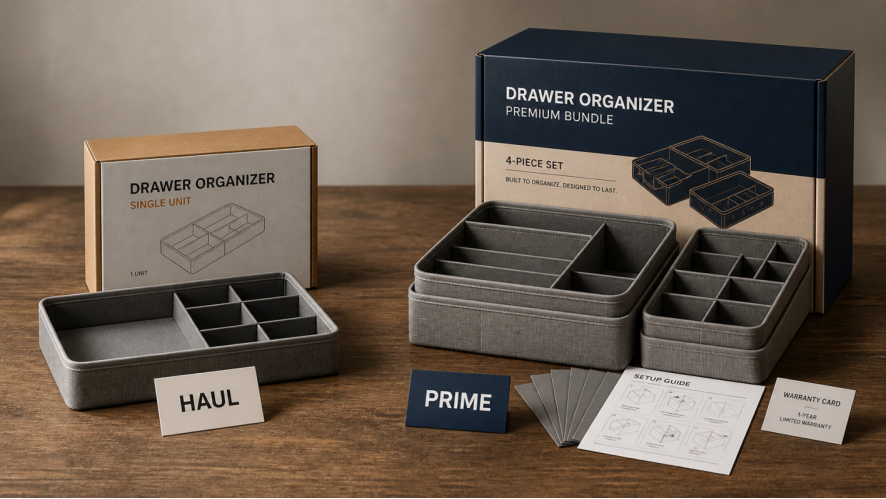
A stronger approach is to create genuinely different offers for different buying situations.
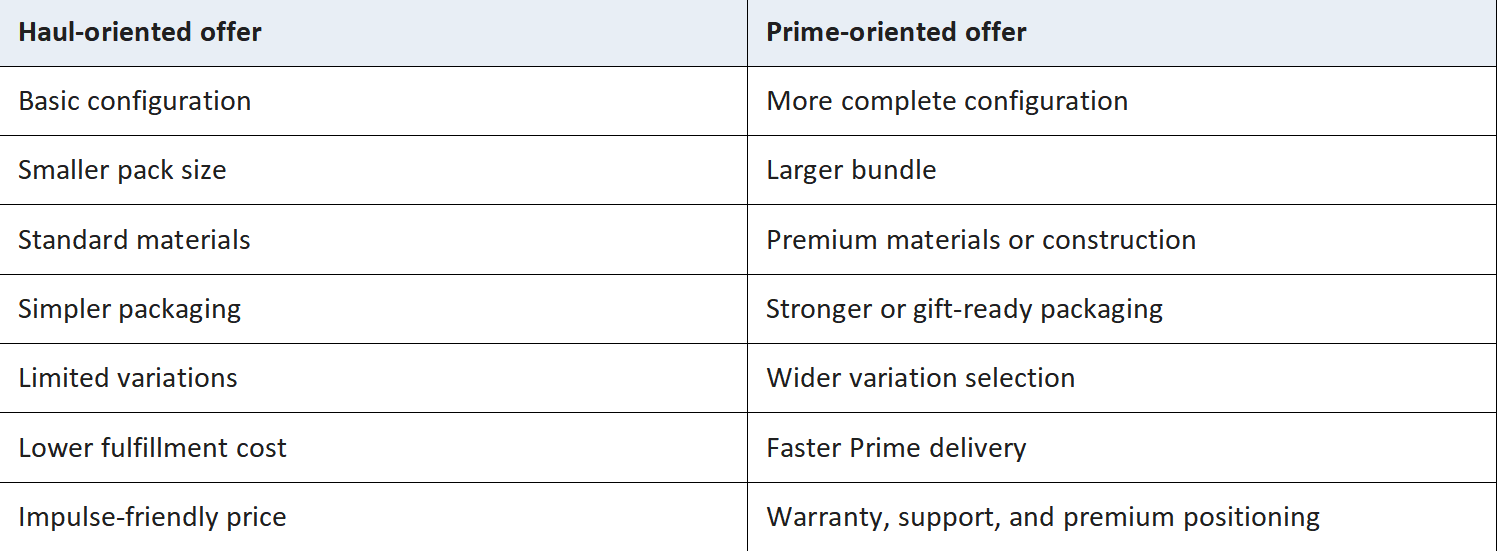
The goal is not to disguise identical products. Each difference should be real, useful, and clearly communicated.
Who Can Sell on Amazon Haul?
Amazon Haul is not an unrestricted program that every seller can immediately join. Amazon Seller Central representatives continued to describe it as invite-only in 2026.
Public forum guidance has mentioned requirements involving price, weight, branding, fulfillment, and seller performance. However, public summaries should not be treated as a substitute for the terms shown in an individual Seller Central account.
Before making operational commitments, sellers should confirm:
- Whether the account has received an invitation
- Which ASINs are eligible
- Current price limits
- Eligible categories
- Weight and dimension restrictions
- Fulfillment requirements and fees
- Return responsibilities
- Cross-market enrollment rules
- Current advertising eligibility
Program terms can change by marketplace and account. Build the financial model using the terms actually available to your business, not an old screenshot or third-party summary.
Three Strategies for Amazon Sellers
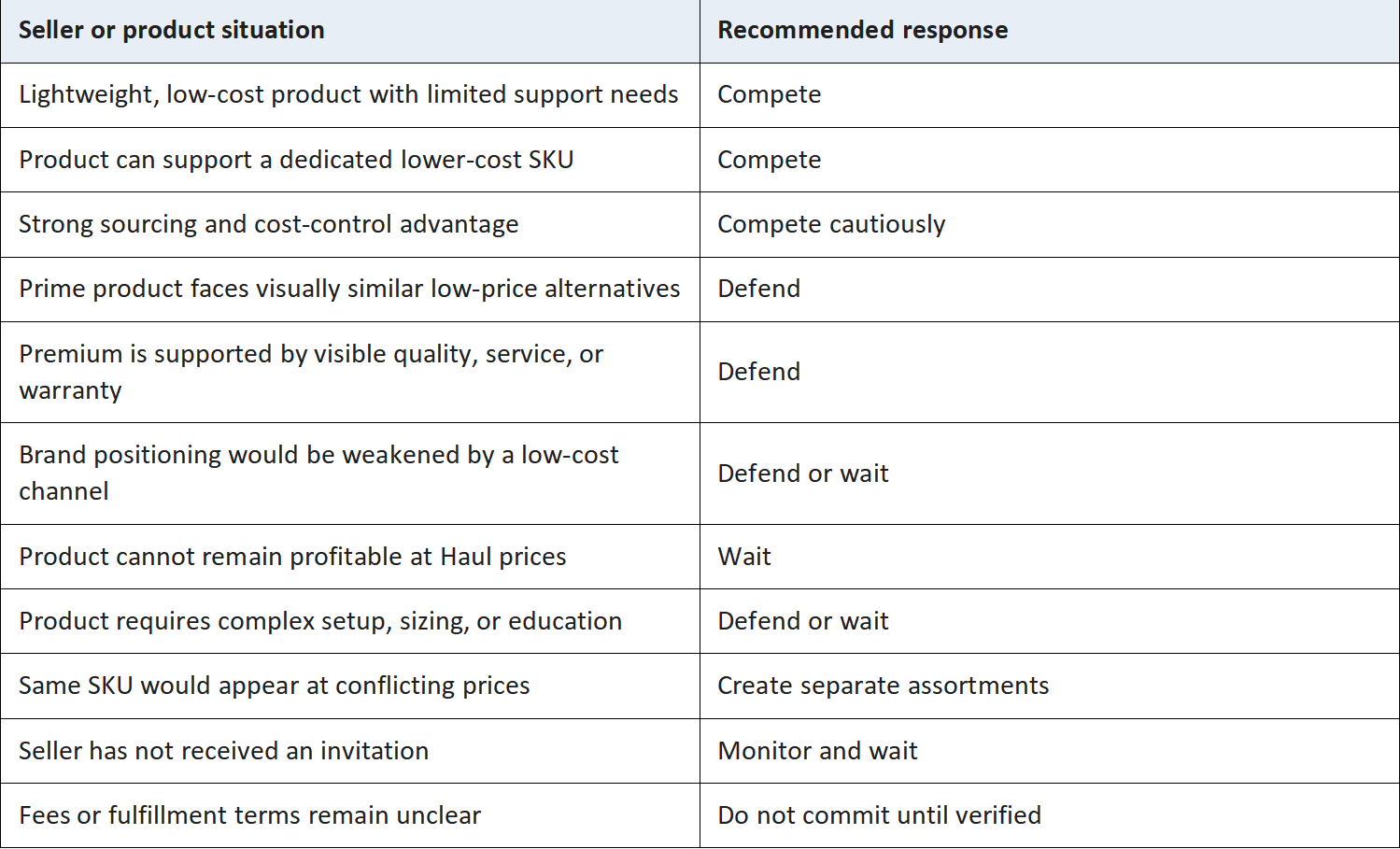
The right response to Haul can be organized into three strategies: compete, defend, or wait.
Strategy 1: Compete
Compete when a dedicated low-cost offer remains profitable after product, fulfillment, return, compliance, and support costs. The best candidates are simple, lightweight products that customers can understand quickly and buy with limited perceived risk.
Set clear margin, defect, and return-rate thresholds before launch. Strong unit sales do not compensate for a product that creates losses or operational problems.
Strategy 2: Defend the Main Marketplace
Defend when the product has a material advantage that customers value or when Haul-level pricing would make the current cost structure unprofitable. Treat low-price competition as a listing audit: can a shopper see the difference in materials, construction, included components, delivery, support, or warranty without searching for it?
Generic claims such as "high quality" are weak defenses. Show the evidence in images, specifications, comparisons, and customer-facing terms.
Strategy 3: Wait
Wait when the account is not eligible, program terms are unclear, no profitable low-cost configuration exists, or entry would weaken the brand. Continue monitoring the category and define the conditions that would justify a future test.
Amazon Haul Seller Decision Matrix

Five Actions Sellers Should Take Now
1. Monitor Haul inside your category
Track products that solve the same customer problem, not only listings using identical keywords. Maintain a simple monthly record of price, quantity, materials, ratings, delivery estimate, and product configuration to identify meaningful changes.
2. Calculate your real price floor
Use the contribution-margin model above to calculate a minimum viable selling price. Stress-test the model at realistic discount, return, and defect rates before treating volume as an advantage.
3. Separate Haul and Prime product architecture
Decide whether the channels require separate SKUs or assortments. Document the genuine product differences and confirm that each offer has a clear role instead of creating price conflict or customer confusion.
4. Make the premium visible
Apply a three-second test to the title and first images: can a shopper immediately identify what makes the Prime offer different? Move the strongest proof of value earlier in the listing.
If you need to turn those differences into clear listing visuals, create Amazon product images and A+ Content with BeePOP.
5. Recheck the current program rules
Verify eligibility, fees, fulfillment, returns, and advertising access inside the relevant Seller Central account. Record the review date and repeat the check before making any inventory or pricing commitment.
FAQ
Is Amazon Haul still mobile-only in 2026?
No. Amazon Haul is available through the Amazon Shopping app and on desktop. Amazon also states that a customer's Haul cart can sync with their regular Amazon.com cart.
Is Amazon Haul available outside the United States?
Yes. Amazon reported that Haul and related low-price shopping experiences had expanded to more than 25 countries and regions by 2026. In some international markets, Amazon uses the Bazaar name for related low-price shopping experiences.
How many products are available on Amazon Haul?
Amazon reported more than one million U.S. Haul items by early 2026. Selection, pricing, and availability vary by marketplace.
Can any Amazon seller join Amazon Haul?
No. Amazon Seller Central representatives continued to describe Haul as invite-only in 2026, with eligibility depending on current account and product requirements.
Will Amazon Haul replace Prime?
That is unlikely because the two experiences address different buying situations. The more immediate concern for sellers is how Haul prices influence customers' perception of value on the main marketplace.
Final Thoughts
Amazon Haul is now large enough to influence seller strategy, but channel participation should follow the economics rather than the excitement around low prices. Use it as a reason to test contribution margins, clarify product architecture, and strengthen the visible value of the Prime offer.
A premium price is defensible only when the additional value is immediately visible.
Amazon Haul eligibility, pricing, fulfillment, advertising access, and return policies may vary by account and marketplace. Sellers should verify current requirements through Seller Central before making operational decisions.
Sources
· Amazon.com Announces Fourth Quarter Results
· Best Amazon Haul Deals for Prime Day 2026