Amazon sellers are again seeing requests to review or certify business information under the INFORM Consumers Act. This Amazon seller verification process is more than an administrative formality: qualifying sellers may need to confirm identity, bank, tax, contact, and address information to keep their account information compliant and avoid potential selling restrictions.
An AMZ123 report published on August 31, 2026, says that some sellers encountered rejected documents, system errors, and warning messages during the latest annual verification cycle. These seller reports are useful signals, but they are not a substitute for Amazon’s official instructions or the text of the law. Sellers should check Seller Central early, submit accurate documents, and contact Amazon through a verified support channel if a request cannot be completed.
What Is the Amazon INFORM Consumers Act?
The INFORM Consumers Act is a U.S. federal law intended to improve transparency in online marketplace transactions and help prevent the sale of stolen, counterfeit, or unsafe products.
The law requires online marketplaces to collect and verify information from certain high-volume third-party sellers. In some circumstances, marketplaces must also disclose specific seller information to consumers.
Amazon has stated that it had seller-verification and seller-vetting procedures before the law took effect on June 27, 2023. The Act introduced additional verification and certification obligations for sellers who meet the statutory requirements.
Who Is Considered a High-Volume Third-Party Seller?
The law generally applies to a third-party seller that meets both of the following conditions on a particular online marketplace:
- At least 200 separate sales or transactions involving new or unused consumer products during any continuous 12-month period in the previous 24 months; and
- At least $5,000 in gross revenue from those marketplace transactions.
Both requirements matter. Reaching 200 transactions alone or generating $5,000 in revenue alone does not automatically satisfy the statutory definition.
The law also includes limited exceptions for certain businesses with qualifying relationships or publicly available, verified business information. Sellers should review the applicable FTC guidance and their Amazon account notices to determine whether the requirements apply to them.
What Information Does Amazon Verify?
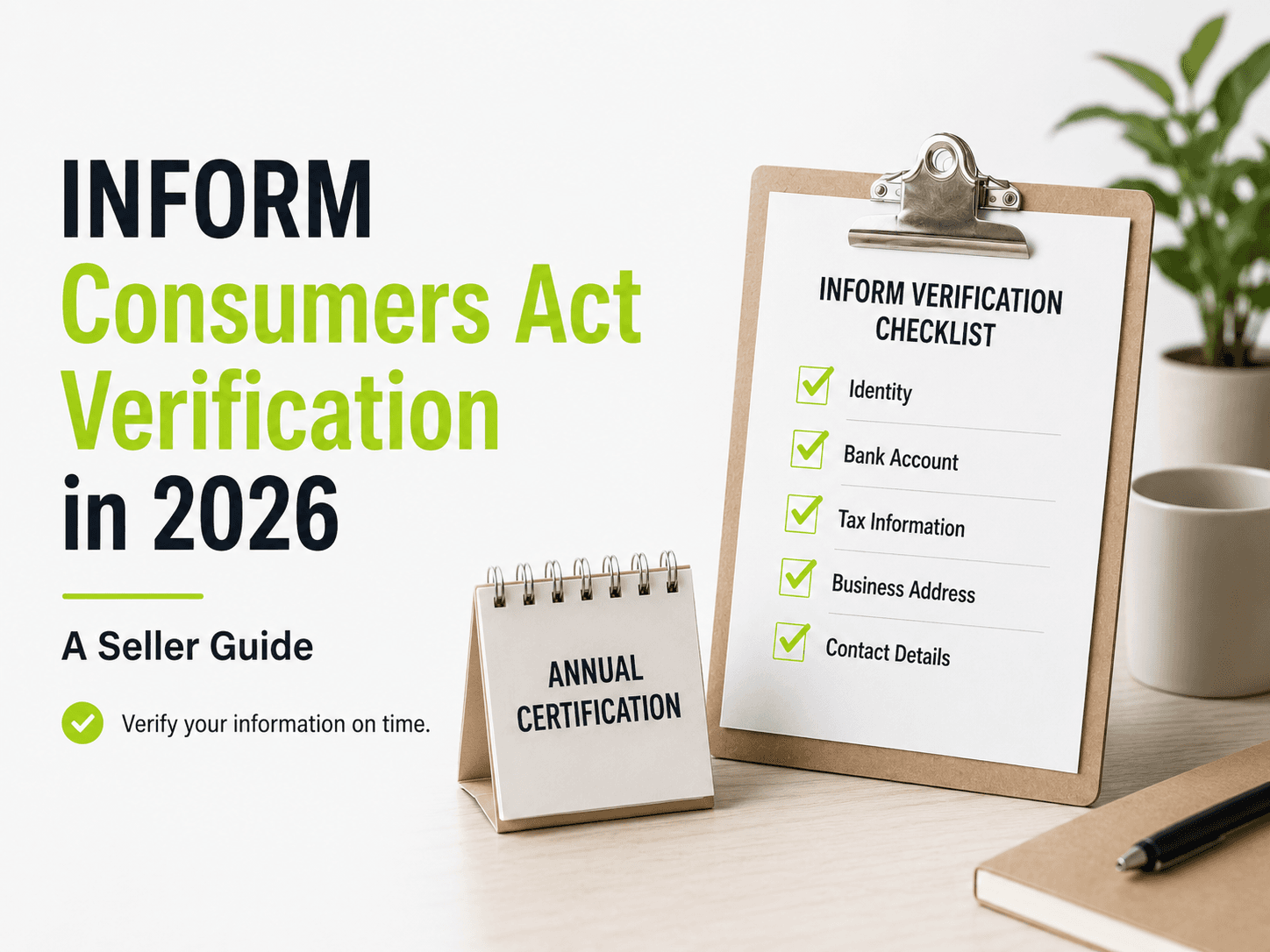
Amazon’s INFORM Consumers Act verification FAQ identifies several categories of information that may need to be collected and verified:
- Seller identity or the identity of an authorized business representative
- Bank account information
- A working business telephone number
- Business address
- Tax identification number
- A working email address
For business sellers, supporting documents may need to show the legal business name and physical address. Depending on the specific request, Amazon may ask for government-issued identification, business-registration records, tax documents, bank records, or other evidence.
The exact document requirements can vary by account. Sellers should follow the instructions shown in Seller Central instead of relying on a generic document list.
Why Does Amazon INFORM Verification Fail?
The AMZ123 report describes seller complaints involving rejected documents, technical errors, and small differences between submitted documents and Seller Central information.
Reported examples include:
- Different address formats
- Variations in punctuation or abbreviations
- Differences involving middle names or initials
- A bank statement showing an address that does not match the seller account
- Inconsistent legal business names
AMZ123 presents these as seller-reported issues and industry observations. Amazon’s public FAQ does not state that every punctuation, spacing, or formatting difference automatically causes rejection. However, keeping all records consistent can reduce avoidable verification problems.
Before submitting documents, compare the following information carefully:
- Legal name and business name
- Street number, unit, city, state, and postal code
- Country and telephone number format
- Bank-account holder name
- Tax identification information
- Business-registration details
Do not edit or alter an official document to force it to match Seller Central. If a document is outdated, obtain a current document from the issuing institution and update the relevant account information through Amazon’s normal process.
What Happens If a Seller Misses the Deadline?
The FTC explains that marketplaces must notify covered sellers when required information is missing or cannot be verified. If the seller does not provide the required information within the applicable notice period, the marketplace must suspend future selling activity until the issue is resolved.
Amazon’s verification FAQ states that failure to provide requested information, documents, or certifications by the required date may result in temporary selling-account deactivation. Amazon also says that disbursements may be held when permitted under the Amazon Services Business Solutions Agreement.
These are potential consequences. A failed upload does not necessarily mean that every seller will immediately lose selling privileges or have payments held. The result depends on the account notice, the deadline, the type of information requested, and whether the issue is corrected.
Amazon INFORM Consumers Act Verification Checklist
1. Check Seller Central Directly
Review the Account Health and Account Information sections in Seller Central. Amazon identifies these areas as places where sellers can review verification status and outstanding information.
Also confirm the precise deadline shown in your account notice or email.
2. Make Your Information Consistent
Use the same legal spelling, address structure, and contact details across:
- Seller Central
- Bank records
- Tax documents
- Business-registration records
- Identity documents
Small inconsistencies may create additional questions during the review process.
3. Submit Clear and Current Documents
Follow the file-format, image-quality, and date requirements displayed in the Amazon verification request.
Make sure that:
- The document is readable
- All relevant pages are included
- The document is not expired
- The name and address are visible
- No information has been digitally altered
Keep a copy of each submitted document and record the date of submission.
4. Respond Within the Required Time
The FTC states that annual electronic certification generally requires a seller response within 10 days of the marketplace’s request. Amazon may also provide an account-specific deadline, so sellers should follow the date shown in Seller Central.
5. Use Genuine Amazon Communication Channels
The FTC advises sellers to confirm that verification messages are legitimate before sharing sensitive information such as bank or tax details.
Instead of clicking an unfamiliar link, sign in to Seller Central directly and check for the relevant notification. Use a support path that you know belongs to Amazon.
6. Escalate Rejected or Contradictory Results
If a document is rejected even though it appears to match your account information, save:
- The error message
- The case or reference number
- The document name
- Screenshots
- The submission date
Then contact Seller Support through Seller Central and ask which specific field or document remains unverified.
After Verification: Improve Your Amazon Listing Content
Once your INFORM Consumers Act verification is complete, you can focus on improving your Amazon listing and brand presentation. BeePOP helps sellers create A+ Content, comparison charts, and product-use visuals from existing product images. It does not replace Amazon’s verification process, which must still be completed through Seller Central.
Key Takeaway for Amazon Sellers
The Amazon INFORM Consumers Act is an ongoing compliance requirement for qualifying high-volume third-party sellers.
The most reliable approach is to:
- Identify the exact information Amazon is requesting;
- Check that all account and business records are consistent;
- Submit an original, current, and readable document;
- Respond before the stated deadline; and
- Keep records of every submission and support case.
The August 31, 2026 AMZ123 report highlights verification difficulties reported by some sellers, while Amazon and FTC guidance explain the underlying requirements and possible consequences.
FAQ
How often must qualifying sellers certify their information?
Covered sellers must generally complete an electronic certification at least once a year confirming that their information remains accurate or has been updated.
The FTC says sellers generally have 10 days to respond to the annual certification request.
Which documents are accepted for Amazon verification?
There is no universal document that is guaranteed to work for every account. Amazon will specify the required evidence in Seller Central. The request may involve identity, bank, address, tax, phone, or email information.
Can an address-format difference cause a rejection?
AMZ123 reports that some sellers experienced problems involving address formatting and other inconsistencies.
However, Amazon’s public FAQ does not say that every punctuation or spacing difference automatically causes rejection. Sellers should treat consistency as a risk-reduction measure rather than a guaranteed solution.
Will a failed verification automatically suspend an Amazon account?
Not necessarily. The outcome depends on the account notice, requested information, deadline, and whether the problem is resolved.
The FTC states that a marketplace must suspend future selling activity when a covered seller fails to provide required information after notice. Amazon also identifies temporary deactivation and possible disbursement holds as potential consequences in certain situations.
Is this article legal advice?
No. This article summarizes publicly available information from Amazon, the FTC, and AMZ123. Sellers with complex ownership, tax, identity, or compliance issues should consult a qualified professional and follow the instructions in their own Seller Central account.